

Introduction on 1st July 2026 of the new European customs regulations on e-commerce marked a turning point for the air cargo industry in Europe and, in particular, for operations at Liege Airport. This first month of implementation of the €3 flat-rate tax on small parcels led to an immediate reorganisation of e-commerce flows, whilst highlighting the resilience of Liege Airport’s multi-freight model.
The introduction of this European tax measure has profoundly altered the structure of imports. Consequently, at the Liege Bierset customs zone, the number of ecommerce parcels fell by 24 per cent over the whole of July compared with July 2025, and by 41 per cent compared with June 2026. Furthermore, the number of declarations in June 2026 fell by 52 per cent compared with July 2025 and by 67 per cent compared with June 2026. B2C volumes valued at less than 150 euros have indeed fallen sharply following the new EU regulations.
At the same time, parcels valued at over 150 euros have, according to a customs source, seen a 10 per cent increase, reflecting a shift towards higher-value shipments and a rapid adaptation by logistics operators. Growth in total tonnage and operational optimisation Beyond the adjustments linked to e-commerce, Liege Airport is maintaining a solid growth trajectory thanks to the diversification of its traditional freight operations.
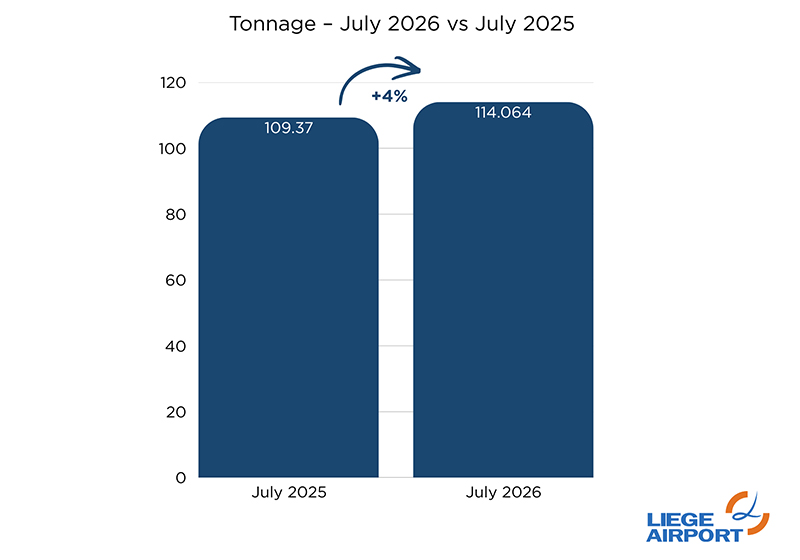
Total tonnage handled at the site rose by 4 per cent in July 2026 compared with July 2025, despite a 4 per cent decrease in aircraft movements, illustrating increased optimisation of aircraft carrying capacity. Pharmaceuticals, data centre equipment and flowers segments actively underpinned the month’s logistics activity. Ongoing investment in the cold chain confirms Liege Airport’s strategic positioning as a leading European hub for high-value-added, temperature-sensitive freight.