

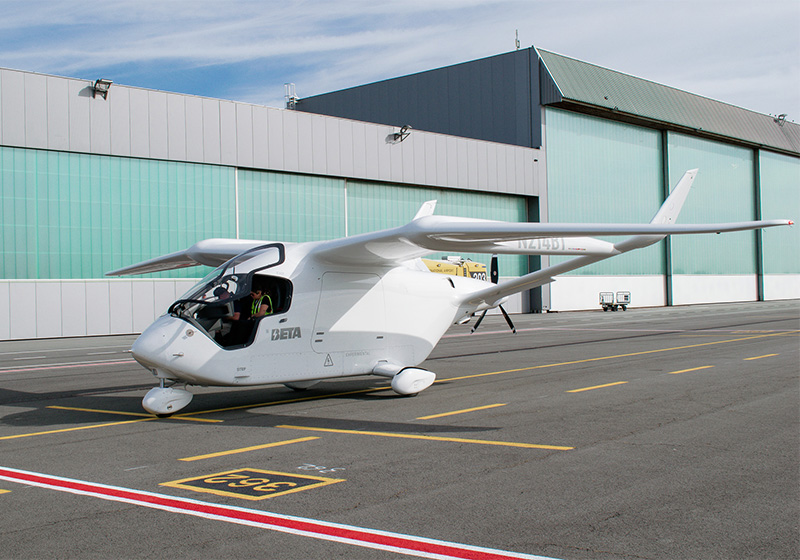
Ostend-Bruges Airport welcomed a fully electric cargo aircraft for the very first time. This demonstration flight was part of a series of operational test flights within the Benelux. The stopover at the NSAC Business Terminal in Ostend highlights the shared ambition of Ostend-Bruges and Antwerp airports to play an active, pioneering role in the transition toward low-emission aviation.
"Regional airports like Ostend-Bruges and Antwerp have the necessary space and operational flexibility required to thoroughly test and further scale up new technologies such as electric flying," says Nathan De Valck, CEO of Ostend-Bruges and Antwerp Airport. "In this way, we can and want to play a pioneering role in making the aviation sector more sustainable."
This stopover makes it possible to experience firsthand what this development looks like in practice. The introduction of electric aviation will trigger a shift in regional air transport over the coming years. This new generation of electric and hybrid aircraft is designed to efficiently connect secondary cities and business hubs within a radius of 500 to 1,000 kilometers with low emissions.
"That is where the opportunities lie for our airports," De Valck notes. "Our airports are located in the economic heart of Western Europe; the Netherlands, France, Germany, the United Kingdom, and Luxembourg are all within easy reach."
In the initial phase, the airports intend to focus on socially crucial, critical niches within freight transport. The primary focus will be on the fast and reliable transport of organs and the distribution of urgent medicines. Additionally, it offers opportunities for rapid, small-scale e-commerce and high-value cargo.
"We expect the technology to be ready for a broader rollout within a few years, allowing regular passenger transport and business aviation to launch as well," says De Valck.