
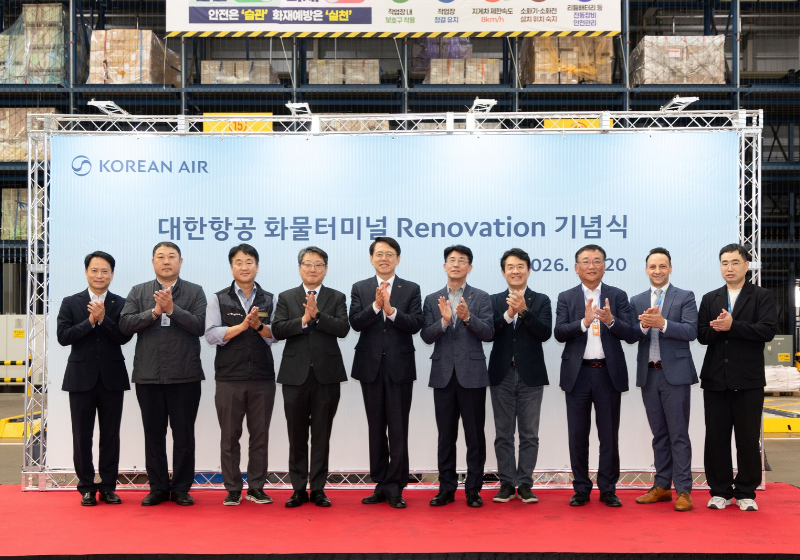
Korean Air has completed a major modernisation of its cargo terminal at Incheon International Airport in cooperation with Lödige Industries, transforming the facility into a fully integrated “Smart Terminal” with upgraded automated handling infrastructure. The project was completed in September 2026 without interrupting ongoing cargo operations. The modernisation has increased hourly ULD processing capacity from 18 to 30 units, while the terminal’s overall cargo handling capacity is expected to increase by more than 25 per cent.
Originally commissioned 25 years ago, the facility has been upgraded while remaining fully operational. This was a complex retrofit requiring meticulous planning and phased execution. Lödige Industries was selected for its expertise in complex retrofits and its ability to integrate advanced automation into legacy infrastructure while maintaining throughput during the transition.
“To manage increasing cargo volumes while consistently delivering high service quality, we are actively advancing modernisation and automation,” said JD Eum, Executive Vice President and Head of Cargo Business Division at Korean Air. “This renovation is an essential step to proactively respond to the rapidly changing global logistics environment by upgrading equipment and integrating smart technologies. Our cooperation with Lödige Industries throughout the project enabled us to impl,ement the modernisation step by step while maintaining the terminal operations.”
The upgrade was rolled out over several carefully orchestrated phases to avoid disruption to cargo handling capacity. The new systems incorporated enhanced workplace safety standards and further improved working conditions for employees. An early stage of the modernisation included the installation of a key bypass lane and extensive conveyor systems within the cool storage area, creating alternative cargo routes for subsequent works. Existing handling equipment was then progressively replaced with new automated systems.
At the core of the upgraded system are three fully automated Elevating Transfer Vehicles (ETVs) from Lödige Industries, supporting the increased ULD processing capacity of 30 units per hour, compared with 18 units previously. Two Automated Guided Vehicles (AGVs) add flexible transport capacity, automatically moving ULDs between import and export zones, build-up and breakdown areas, and storage locations.
“Projects of this scale depend on close coordination, particularly when modernisation must take place without interrupting daily cargo operations,” said Nicholas Tripptree, Managing Director for Asia-Pacific at Lödige Industries. “The successful completion of this project reflects the strong partnership and trust between Korean Air and Lödige Industries. Together, we navigated the complexities of upgrading an existing facility. We value Korean Air’s continued trust and look forward to supporting the system’s long-term performance.”